
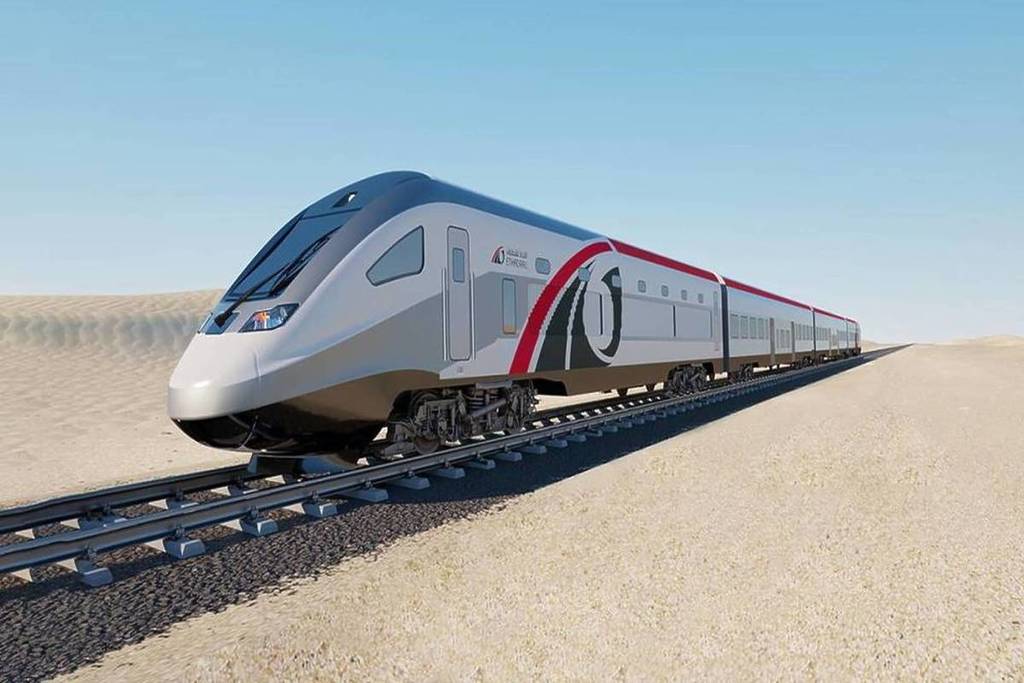
The UAE is preparing for a major shift in how people move between its cities. Etihad Rail releases its passenger route, expected to launch in 2026, that will connect Abu Dhabi, Dubai, Sharjah and Fujairah by train for the first time. The high-speed train project is designed to shorten travel times between 11 cities and regions, reduce pressure on highways and create new travel patterns across the country.
Leave behind the heavy traffic and mindless waiting for hours on the end! Announced in early 2025, the Etihad Rail will travel at the speed of 200km/h and can accommodate up to 400 passengers.
Revealed passenger routes and stations
Etihad Rail has confirmed that its first passenger service will begin operations in 2026. The initial route will link Abu Dhabi to Dubai and continue towards Fujairah on the east coast. This network connects three of the UAE’s economic centres and forms the backbone of the wider national railway.
Travel times are expected to drop significantly. Etihad Rail announces the remaining planned stations in Al Sila’, Al Dhannah, Al Mirfa, Madinat Zayed, Mezaira’a, Al Faya and Al Dhaid, which will become operational in phases.
The rail service will offer consistent journey times regardless of peak periods. For Fujairah, the impact may be even greater. Driving from Dubai or Abu Dhabi to the east coast often involves navigating mountain roads and traffic bottlenecks.
Where the first passenger stations will be located
In Abu Dhabi, the main station will be located in Mohammed bin Zayed City, a growing residential and commercial area with access to major highways. This location makes the station a future transport hub for the capital’s expanding suburbs.
The Dubai main station will be in Jumeirah Golf Estates. The area sits close to key road networks and developing residential communities, making it a practical choice for both commuters and long-distance travellers.
In Fujairah, the station will be located near the Al Hilal area, close to new urban developments and within reach of the emirate’s coastline.
In Sharjah, the station will be located near University City where students and university-going professionals will have easy access. It is also positioned in the main city hub in Sharjah to allow easier access for commuters.
Additional information on the high-speed train in UAE
Beyond the initial three stations, Etihad Rail plans to expand passenger services to a total of 11 stations across the country.
Stations such as University City in Sharjah and Al Dhaid are expected to serve students and residents who currently depend heavily on private cars. In western Abu Dhabi, stops in areas like Al Dhannah and Madinat Zayed could improve access to industrial zones and smaller communities. These additional stations aim to link all seven emirates and support regional growth.
What passengers can expect onboard
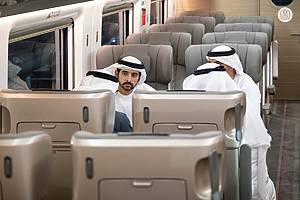
Etihad Rail’s passenger trains are designed with comfort and long-distance travel in mind. Carriages will include spacious seating, onboard Wi-Fi and charging points. Multiple travel classes are expected, catering to business travellers, families and budget-conscious passengers.
Facilities such as prayer areas and digital information systems are also planned, reflecting the needs of both local commuters and international visitors. The overall experience is intended to match modern intercity rail standards rather than short metro journeys.
How rail travel could change tourism
The introduction of passenger rail is likely to influence domestic tourism within the UAE. Cities previously seen as day-trip destinations may become more attractive for short stays, while lesser-known towns along the rail corridor could see increased visitor numbers.
Fujairah, in particular, may benefit from easier access from Dubai and Abu Dhabi. Its beaches, mountains and cultural sites could draw more weekend travellers who prefer not to drive long distances. Rail travel also creates opportunities for multi-city itineraries, allowing visitors to explore the country without renting a car.
Beyond convenience, Etihad Rail plays a role in the UAE’s wider sustainability goals. Shifting a portion of inter-emirate travel from cars to trains can help reduce road congestion and lower emissions. For daily commuters, the service offers a less stressful alternative to long highway drives. Over time, this could influence working patterns, housing choices and even office locations, particularly as more companies adopt flexible work models.
When will the Etihad high-speed Rail begin operations?
Etihad Rail officials say that 10 out of 13 trains in the fleet have arrived and operations will begin in 2026 itself. Further details on ticket pricing, schedules and full station operations are expected closer to the 2026 launch.